
Supporting men through Moments That Matter

Being present for your children. Doing work you find fulfilling. Supporting someone you love. Having time to look after your health.
These are hopes many men bring to their working lives. Alongside them can come competing expectations: to provide, keep progressing, remain dependable and manage whatever life brings.
The Moments That Matter, becoming a father, taking on caring responsibilities, facing a health challenge or navigating a career change, can bring those expectations into sharper focus. They can also open up important questions about priorities, identity and what support would make a difference.
For organisations, understanding men’s wellbeing starts with making room for those conversations. It means hearing men’s perspectives on their own lives, rather than assuming we already know what they need.
What are men telling us?
Many fathers want to share parenting more equally. Understanding what helps, and what gets in the way, is an important part of supporting their wellbeing.
Research by Working Families and Wates Group, published in 2025, surveyed 5,000 working fathers across the UK with children aged 0–17. It revealed a gap between the involvement fathers want to have at home and how supported they feel at work to actually take this time.
74% wanted to embrace equal parenting, yet workplace expectations and concerns about taking time away could make that difficult.
Around 60% felt judged for prioritising family, and 44% felt mothers were more likely to be given flexibility to manage childcare.
The research also found that:
- 50% felt nervous asking for flexibility or time off for childcare. This rose to 64% among Gen Z fathers, compared with 40% among Gen X fathers.
- 28% worried that asking for greater flexibility would make them appear less committed, while 22% worried about the effect on their career progression.
- 35% said they couldn’t take as much parental leave as they wanted, and 6% took no leave at all.
These findings invite organisations to consider what happens when an employee becomes a father. Alongside the joy and adjustment at home, is he weighing up how a request for support might be received? Does he feel able to share caring responsibilities while continuing to develop his career?
Why men’s experiences matter to gender equality
The effects of these barriers reach across the family. 78% of fathers surveyed reported strain on their own health or that of their partner or child. Around one in five said they had needed to rely on their partner taking more time off or changing their job to manage childcare.
The research also found that 27% had missed out on time with their child, while 26% had felt stressed or guilty about not meeting their child’s needs. These are personal experiences that deserve to be heard in conversations about both wellbeing and equality.
For a father, being able to care for his child can be central to the relationship he wants to build and the life he wants to lead. When workplace expectations make that difficult, it can affect his wellbeing and the choices available to his partner. Progress towards gender equality depends on men being included in the equation – with real opportunities to care, work flexibly and build fulfilling lives.
Supporting women how to combine careers and caring addresses one part of the picture. Supporting men what would help them share those responsibilities brings another essential perspective.
Creating space for support
There is a positive foundation to build on in the study: 88% of respondents felt able to talk about balancing work and fatherhood in their workplace. The opportunity for employers is to turn that openness into confidence that a request for support will be understood and fairly considered.
Supporting men through the Moments That Matter means listening to what they want from work and family life, understanding the pressures they face, and making practical support part of everyday workplace culture.
For employers, that means exploring whether flexibility is equally encouraged, whether fathers and carers see themselves in communications, and whether progression feels compatible with having responsibilities beyond work.
There is also an important wellbeing dimension to this conversation. England’s Men’s Health Strategy identifies expectations to appear strong, remain in control and avoid showing vulnerability as potential barriers to emotional expression and seeking support.
A useful question for organisations is: Have we created opportunities where men feel comfortable speaking, and where someone is ready to listen?
That might be a conversation with a manager, a fathers’ or carers’ network, or confidential coaching that gives someone time to think beyond the immediate demands of their role.
Different experiences, shared understanding
Our male coaches here at P&P bring a range of perspectives to these conversations, shaped by their professional backgrounds and their experiences of fatherhood, caring, leadership and health. Their central presence within P&P’s team reflects a commitment to including men in the support we offer and the conversations we help organisations have.
Below, five of them share how those experiences shape their approach to supporting others through the Moments That Matter.
Simon Hill: Finding space between work and caring (UK)
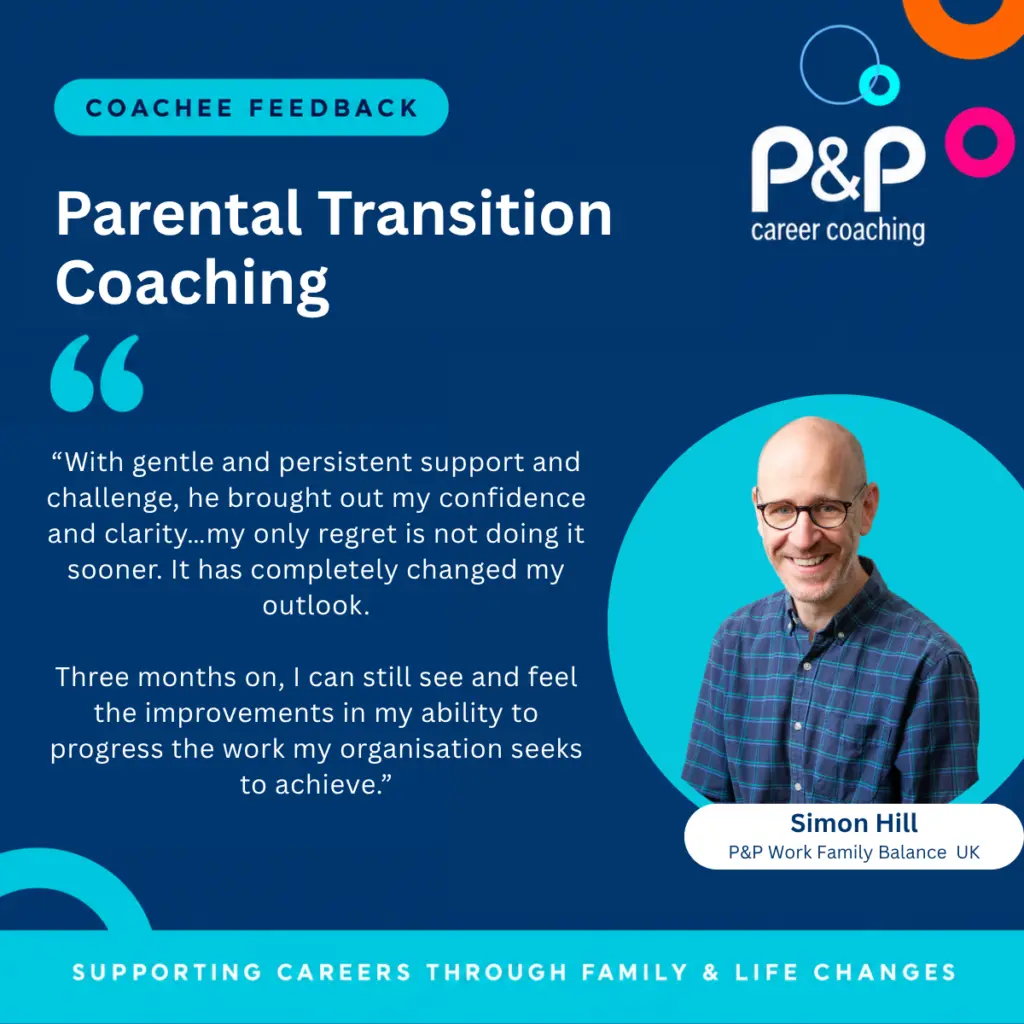
For Simon, working full time while raising young children and supporting ailing parents became a turning point. He understands the pressure of being needed at work and at home, with little space to consider your own wellbeing.
Now a father of two teenagers, Simon brings experience in senior leadership, charities and social enterprise to his coaching. He helps people navigate the Moments That Matter, reflect on changing family responsibilities and make thoughtful choices about work and home life.
His perspective highlights the importance of recognising men as carers, too. Giving men space to talk about what they are managing can help them feel understood, ask for support and find a more sustainable balance.
Ian Dinwiddy: Helping fathers find their own way (UK)
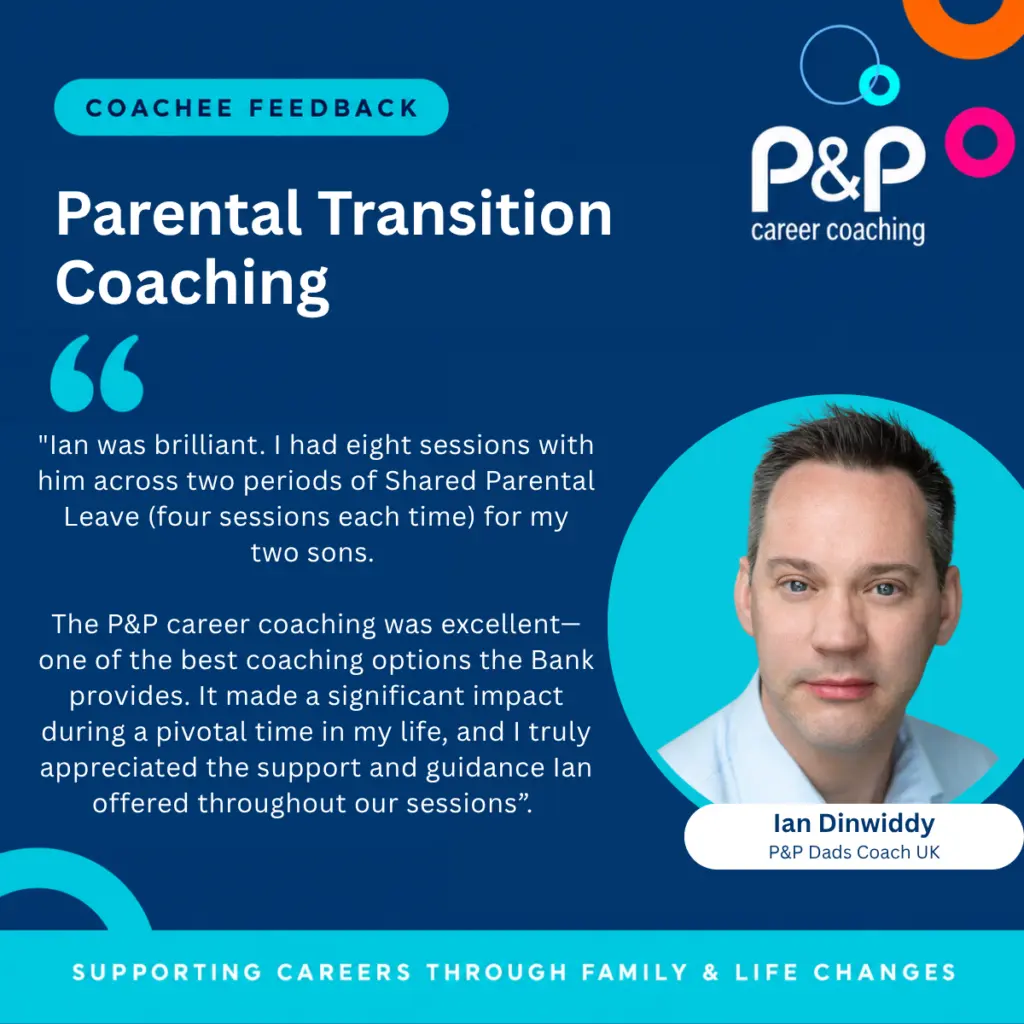
Ian specialises in supporting fathers, bringing personal understanding to the challenges of balancing a career with being present at home.
His coaching gives dads space to explore their ambitions, relationships and the kind of father they want to be. From preparing for parental leave to returning to work and adapting as children grow, he helps them make thoughtful choices about work and family life.
Ian also champions the role that supporting fathers plays in progressing gender equality. Do fathers feel encouraged to take parental leave, ask for flexibility and share caring responsibilities, with confidence that their careers can continue to progress?
Tim Hedin: Creating room to pause and reflect (UK)
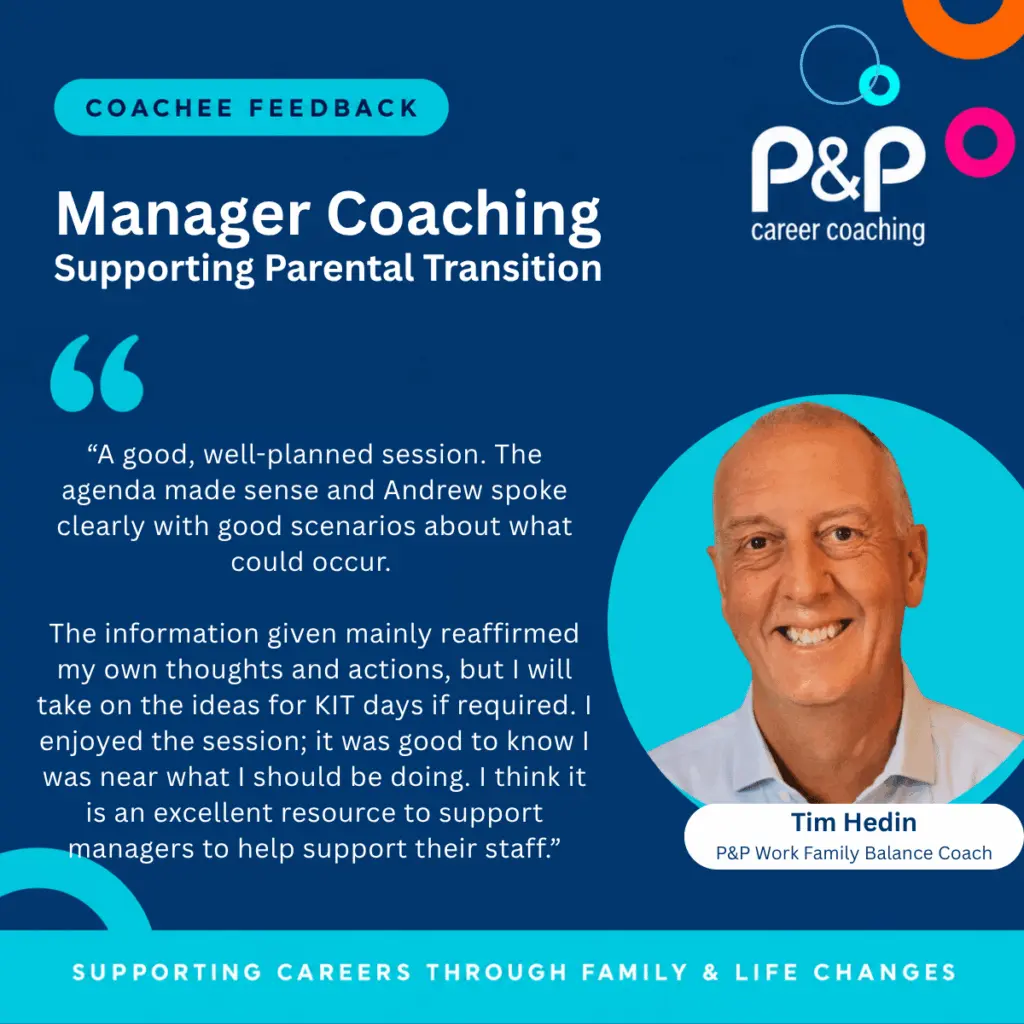
With 30 years of experience in London’s financial markets, Tim understands the pressures of a demanding career and how difficult it can be to make space for life beyond work.
His own career change followed reflection on his priorities and how he wanted to use his strengths. He now brings that understanding to his coaching, offering a calm space to explore career ambitions alongside family responsibilities, without judgement.
Tim helps people reflect on what matters to them, set boundaries and consider how work and family life can fit together more sustainably. He also supports managers to have open conversations about these pressures and explore practical ways to help.
Riccardo Masera: Bringing ambition and family life together (UAE)
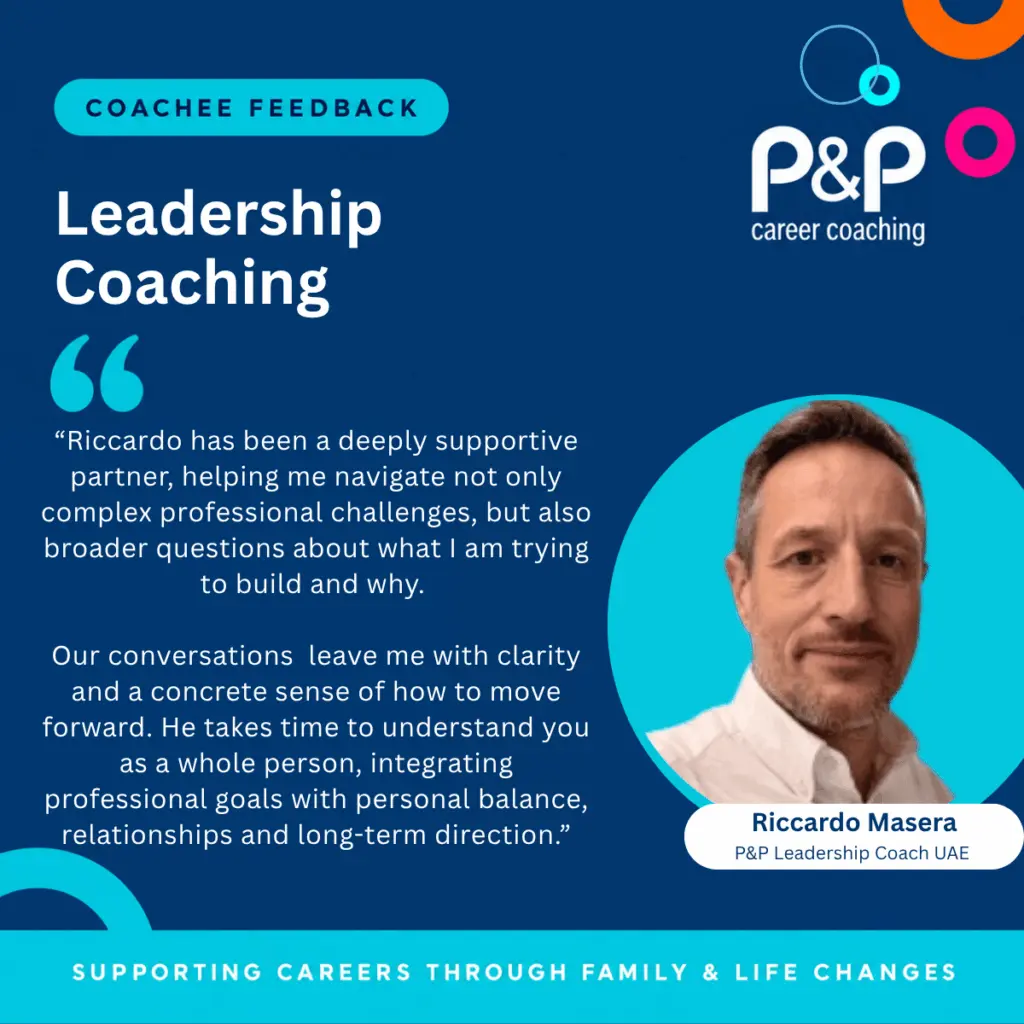
Riccardo brings over 25 years of international leadership experience across Europe, the Middle East and Africa. Having held senior executive and Group CFO roles, he understands the demands of working closely with CEOs, boards, investors and founders, where decisions carry significant responsibility.
As a father of three, raising his family across different countries and cultures. His coaching gives senior leaders space to think openly about their professional and personal priorities through the Moments That Matter. Whether navigating parental transitions or changing family needs, he helps them consider how to lead effectively while remaining present and engaged at home.
Chris Ho: Bringing lived experience to men’s wellbeing (Canada)
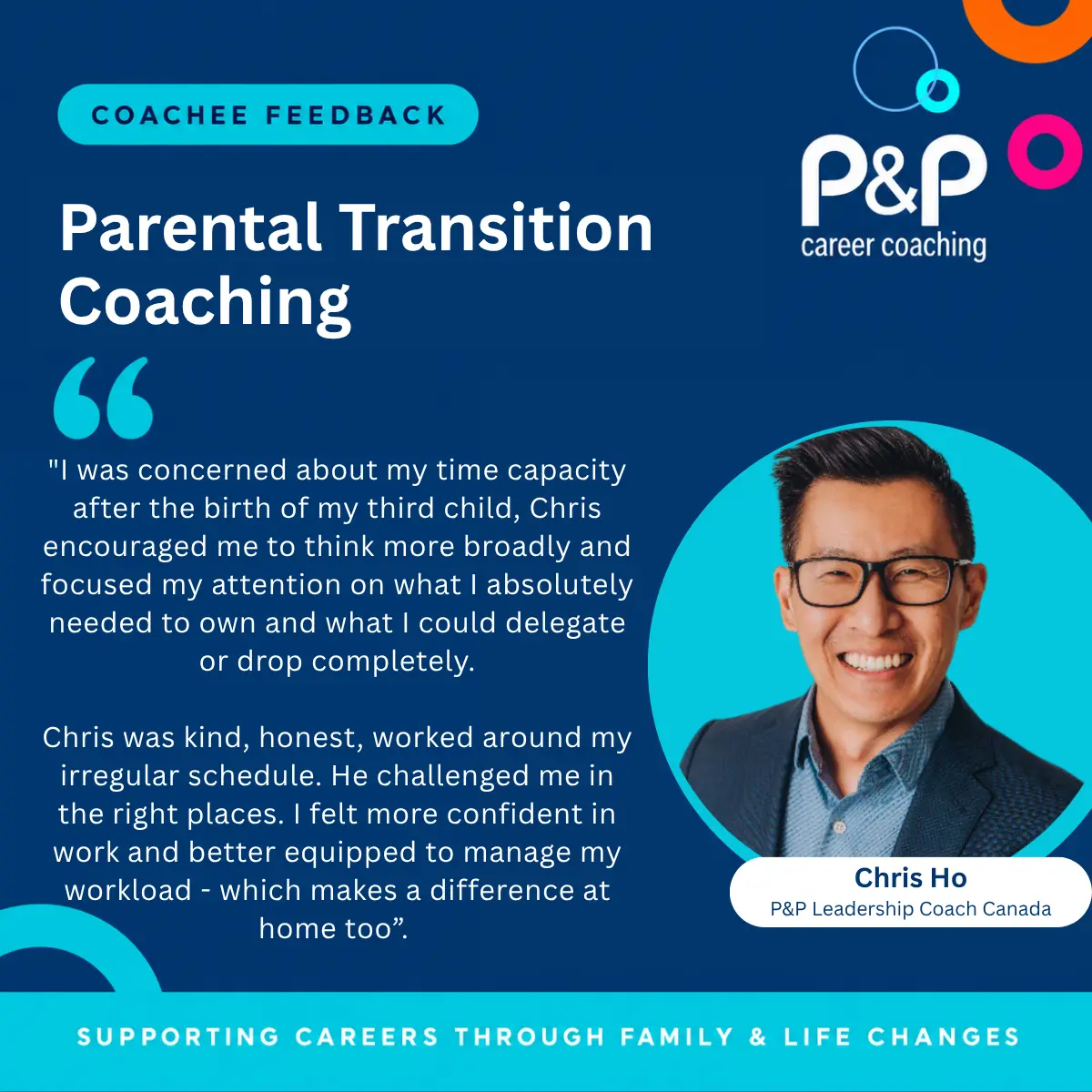
Chris brings a deeply personal perspective to supporting men through the Moments That Matter.
An executive leadership coach, father of two boys and two-time cancer survivor, he is passionate about cancer patient advocacy, men’s mental health and positive masculinity. Chris creates space for men to speak openly about the pressures they face, reflect on their wellbeing and consider how they want to be present at work and at home.
His approach reflects P&P’s commitment to workplaces where men feel able to ask for support, whether they are adapting to parenthood, managing a health concern or balancing leadership and family responsibilities.
What can you do this International Men’s Day to continue the conversation?
International Men’s Day on 19 November is an opportunity to hear men’s experiences, understand what matters to them and start conversations that continue beyond the day.
Small, everyday actions can make a difference: a manager making time to listen, a father feeling encouraged to ask for flexibility, or a colleague knowing where to turn for confidential support.
If you want to strengthen support for men but are considering where to begin, a pilot provides a manageable starting point.
P&P’s men’s wellbeing pilot package combines:
- An expert-led webinar to raise awareness and open up conversations.
- Confidential one-to-one coaching to give men space to explore their individual experiences and priorities.
- Employee communications to help you promote the support available.
- Anonymous feedback to help you understand the impact and shape your next steps.
The webinar creates an opportunity to explore shared themes. Coaching provides a more personal space where employees can reflect on what they are navigating and consider how to move forward.
Together, these elements help employers offer support while learning from the experience. Anonymous feedback can inform decisions about what to develop, making International Men’s Day a starting point for an ongoing approach to men’s wellbeing.
When men feel supported at work and at home, we move closer to a more equal workplace for everyone.
Get in touch with our team to discuss how supporting men’s wellbeing can benefit your organisation.